
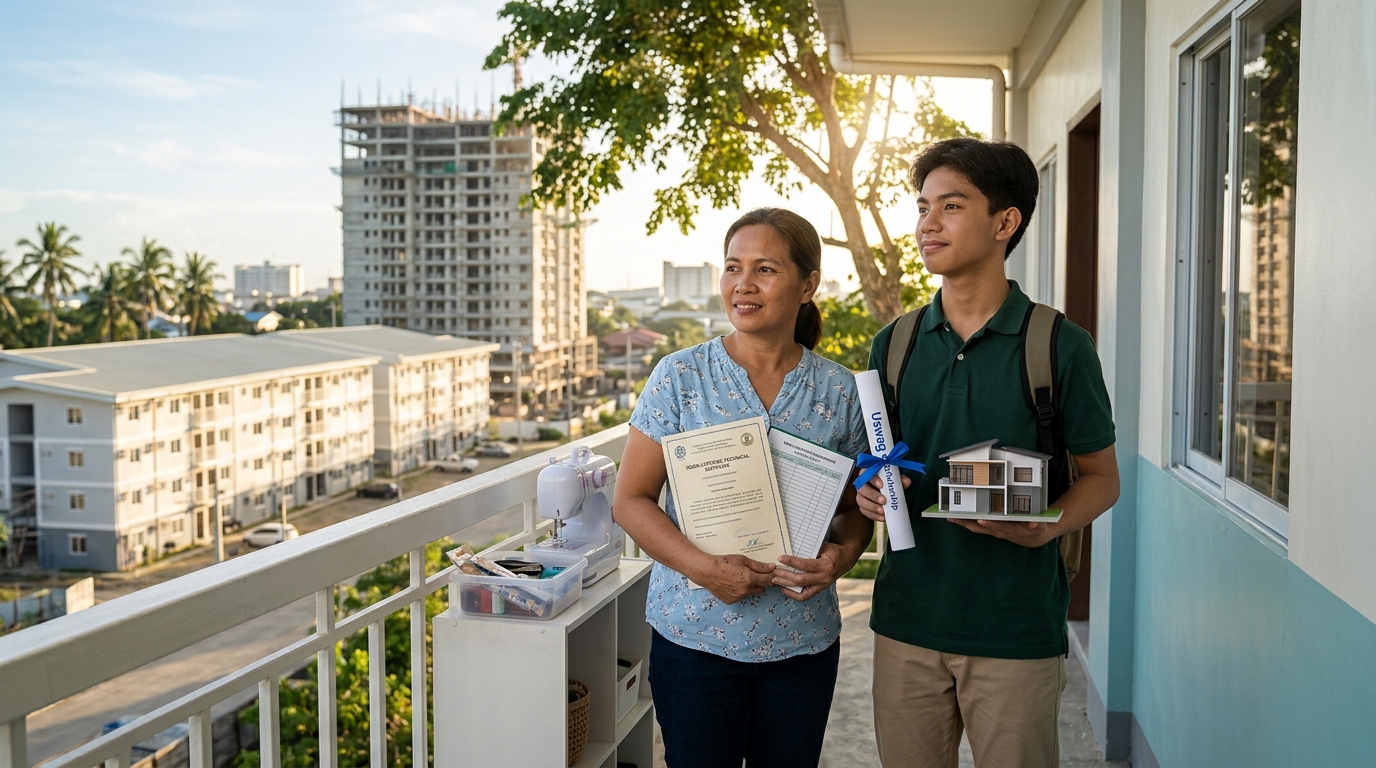
ILOILO CITY — The Iloilo City government is pivoting its Pantawid Pamilyang Pilipino Program (4Ps) strategy from short-term cash aid to long-term economic independence, a move that local real estate analysts are watching closely for its ripple effects on housing demand. On May 1, 2026, Mayor Raisa Treñas met with 4Ps parent leaders and unveiled a dual-track intervention: automatic enrollment of aging-out youth into the Uswag Scholarship for college or the Technical Institute of Iloilo City (TIIC) for vocational training, and a Sustainable Livelihood Program (SLP) specifically designed for mothers. The SLP provides financial assistance and additional allowances to help mothers scale home-based businesses such as food vending, tailoring, and retail micro-enterprises.
With 5,076 families in Iloilo City having graduated from the program, the shift carries measurable weight for the property sector. When combined with the city's expanded social safety net—including a PHP1,000 quarterly aid to 2,000 PWDs and a senior pension increase from 8,000 to 9,000 beneficiaries—the push to turn aid recipients into earners is building a wider pool of households that can qualify for housing loans and starter home packages. For developers currently marketing units in the Uswag 4PH Condominium Complex, Glade Residences, and the new 362-unit Iloilo Residences rental housing project, the emergence of economically stable 4Ps families represents an expanding, rather than aspirational, market segment.
From Scholar to Salaried Worker: A Future Pipeline for Housing Loans
Under the new framework, each 4Ps household will eventually produce at least one college graduate or TESDA-certified skilled worker, effectively transforming a household that was once a rent burden into a mortgage-ready family. Treñas framed the objective as a decisive break from perpetual assistance: "We are prioritizing sustainable help—not just temporary aid, but opportunities that provide strength to our 4Ps families. When their children finish school and secure decent jobs, that is true progress". Real estate developers view this language as a signal that the city is methodically building a future base of formally employed, bank-qualified homebuyers.
The housing implications become clearer when projected against local market data. Colliers Philippines reported that Iloilo City's residential take-up rates are among the highest in the country: 96 percent for house-and-lot packages, 89 percent for condominiums, and 80 percent for lot-only purchases. With 4Ps graduates entering a local job market anchored by the Iloilo Business Park's nearly 100,000 direct and indirect workers, their future incomes will flow into an established property ecosystem that already offers PHP850-per-month rental units in Jaro and amortized units in the 1,677-home Uswag 4PH complex.
Mothers as Micro-Entrepreneurs: A New Source of Down Payments
The second arm of the shift—livelihood grants for 4Ps mothers—carries a faster-acting real estate impact. The financial assistance enables women to scale small enterprises, generating immediate supplemental income that can fund rental payments, lot amortizations, or Pag-IBIG contributions. The city government's distribution of 820 land titles in April 2026 and millions in socialized housing loans through the Luntiang Bukas initiative already demonstrates that micro-entrepreneurs are being actively integrated into the formal property system.
Iloilo Local Housing Office head Peter Jason Millare confirmed that eligibility for housing projects is now strictly needs-based and open market, prioritizing first-time buyers without existing property regardless of political connection. This depoliticized allocation means that as 4Ps mothers accumulate savings and contribute to Pag-IBIG, they enter the same transparent queue as other working-class Ilonggos. The convergence of livelihood income, scholarship-graduate earnings, and the city's open-access housing programs positions 4Ps families to transition from program beneficiaries to taxpaying, property-owning households within a single generation.
TAGS: