
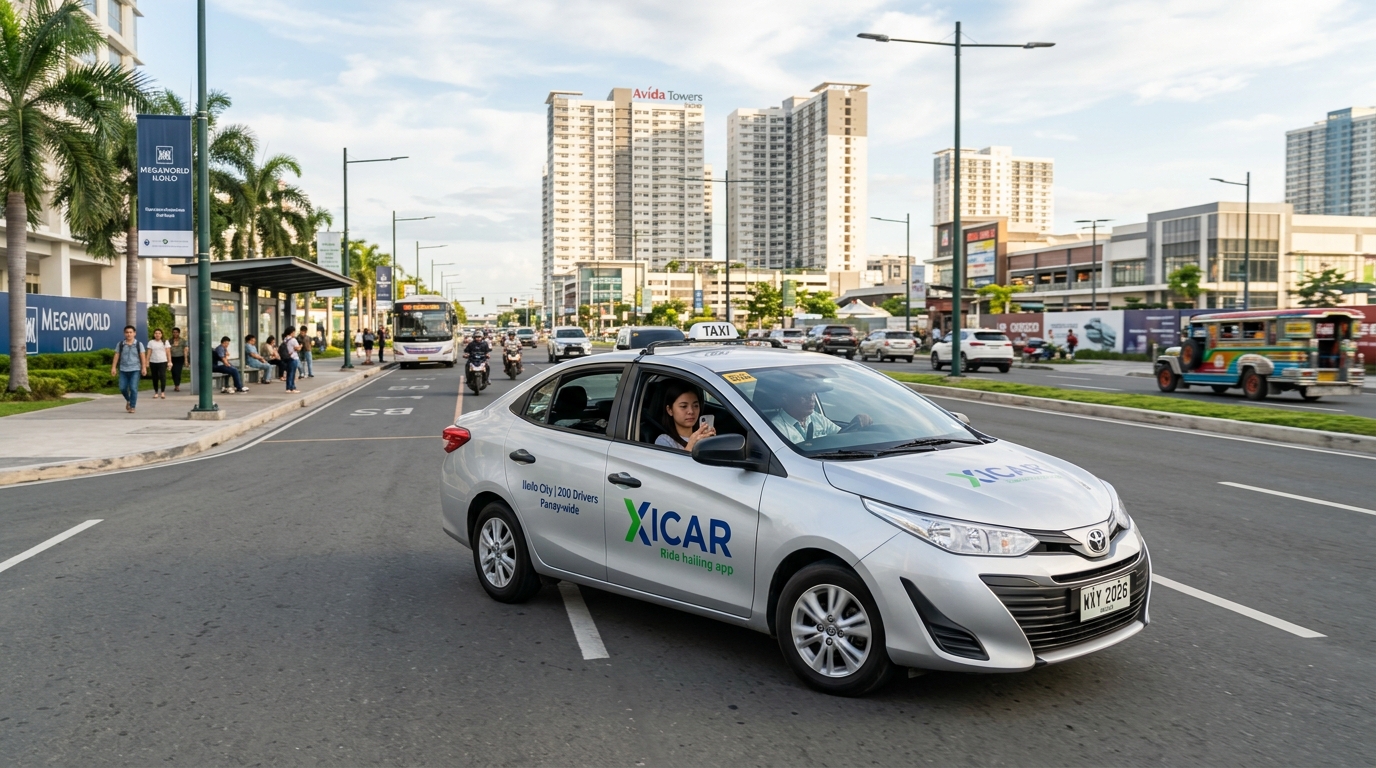
ILOILO CITY — The formal launch of Xicar, a locally developed taxi-dedicated ride-hailing application, on May 4, 2026, is set to modernize Panay Island’s taxi industry and, in the process, reshape the local property landscape. Real estate analysts note that improved transportation connectivity is a proven driver of residential and commercial property demand. By making previously underserved neighborhoods more accessible and reducing reliance on private vehicles, Xicar’s entry is expected to broaden the catchment areas for housing and business locations across Iloilo City and beyond.
The platform, which already has 200 drivers on board from several taxi operators, offers real-time tracking, scheduled trips, cashless payment, and a notable absence of surge pricing. Its coverage extends not only within the city but to farther areas across Panay Island, effectively shrinking travel times and making outlying towns more viable for residential development. For the real estate sector, the app acts as a connective tissue that turns distance into a manageable variable rather than a dealbreaker.
A Homegrown Mobility Solution That Redraws the Commuter Map
Xicar was founded in 2025 by Kaitlene Rivilla and Ken Motomitsu, young taxi operators who observed that the traditional taxi industry was losing ground to transport network vehicle services (TNVS). Their response was an app that combines the reliability of regulated taxi services with the convenience and transparency of modern ride-hailing platforms. Because it does not charge a booking fee and uses the LTFRB-regulated meter system, passengers enjoy fixed, predictable fares—an important consideration for daily commuters and potential homebuyers evaluating monthly transport costs.
The app’s points-based rewards system, which offers rebates of PHP1 per kilometer that can be converted into discounts or free rides, adds a further incentive for regular use. Over time, these micro-savings accumulate, effectively reducing the cost of living in areas that were once considered too remote from the city center. Property developers in Iloilo’s expanding suburbs—such as Pavia, Oton, and Leganes—are likely to cite the availability of reliable, app-based taxi services as a new selling point for their projects.
Accessibility as a Real Estate Value Multiplier
Transportation infrastructure has long been recognized as a primary determinant of property value. Studies consistently show that improved accessibility can raise land prices by 10 to 20 percent in urban and peri-urban areas. Xicar’s launch introduces a flexible, demand-responsive layer to Iloilo’s existing public transport network, which already includes jeepneys, buses, and tricycles. For a city where residential take-up rates are among the highest in the country—96 percent for house-and-lot packages and 89 percent for condominiums in the first quarter of 2026—any enhancement to the mobility ecosystem strengthens the investment case for both end-users and speculators.
Commercial real estate also stands to benefit. Restaurants, retail outlets, and offices that were once dependent on customers with private vehicles can now tap into a broader pool of potential visitors who can book a taxi with a few taps on their smartphones. The app’s “quiet ride” and “audio protection” features, along with 24/7 customer support, address safety and comfort concerns that have historically deterred some passengers from hailing taxis on the street.
A Broader Boost for Panay’s Real Estate Market
Xicar’s Panay-wide coverage holds particular significance for the island’s real estate market. Towns such as Miag-ao, Tigbauan, and Guimbal, which lie along the southern coastal corridor, or the northern municipalities of Barotac Viejo and Ajuy, now stand to benefit from a more seamless connection to the economic hub of Iloilo City. As commute times become more predictable and less stressful, these areas become more attractive to families seeking affordable house-and-lot options within a reasonable distance of urban employment centers.
The launch also aligns with the city’s broader push to modernize its infrastructure and attract investment. Iloilo City has already been recognized as an ASEAN Clean Tourist City and a UNESCO Creative City of Gastronomy, and its office market recently recorded the highest number of transactions outside Metro Manila. Xicar adds a practical, everyday technological layer to this narrative, reinforcing Iloilo’s image as a city that is not only culturally rich but also functionally advanced—a combination that property investors find increasingly compelling.