
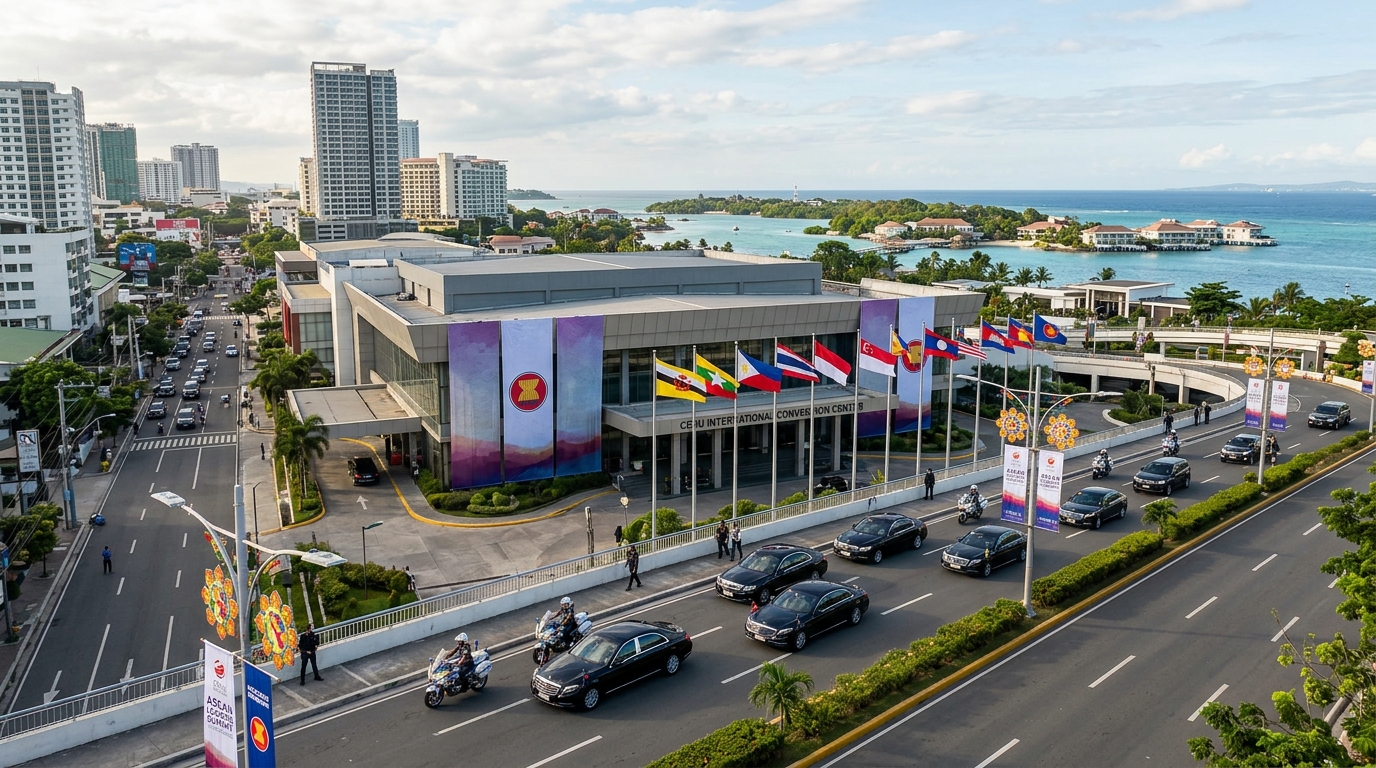
While travelers usually flock to the Queen City of the South for its white sands, the week of May 4 to May 8, 2026, has seen the urban landscape of Metro Cebu transform into a fortress of international diplomacy. Hosting the 48th ASEAN Leaders Summit and Related Meetings, the cities of Cebu, Mandaue, and Lapu-Lapu have effectively become the administrative heart of Southeast Asia. This massive diplomatic undertaking has prompted a city-wide operational shift, including a rare three-day work suspension to accommodate the motorcades of ten heads of state. For those navigating the city this week, the atmosphere is a unique blend of high-level security and festive regional pride, proving that Cebu’s infrastructure is now capable of hosting the world’s most significant geopolitical conversations.
A Sudden Holiday for a Global Cause
The operational rhythm of the city changed abruptly on May 5, 2026, when Malacañang issued Proclamation 1239, extending a special non-working holiday to Cebu City and Mandaue City for the summit's peak days. Originally limited to Lapu-Lapu and Cordova, the expansion was a tactical necessity to alleviate traffic along the critical transport routes used by international delegates. While the sudden announcement created "staffing gaps" for some local firms, it ensured that the high-stakes meetings between ASEAN leaders and their global partners could proceed without the usual urban gridlock. This holiday period has allowed residents to witness a more organized, albeit quieter, side of the metropolis as the eyes of the world remain fixed on the proceedings at the Cebu International Convention Center.
The Surge in Lapu-Lapu Business
While the city center remains under strict protocols, the hospitality sector in Lapu-Lapu City is witnessing an unprecedented volume of activity. The summit has brought in a massive influx of international media, security personnel, and support staff, filling the island’s upscale resorts to maximum capacity. This week, local businesses in the Mactan area have reported a significant uptick in "Diplomatic Spending," as delegates explore the city's high-end dining and retail offerings between sessions. This surge acts as a real-time proof of concept for the "Experience Economy" strategy recently discussed at the Cebu International Investment Summit, highlighting the island's readiness for massive MICE (Meetings, Incentives, Conferences, and Exhibitions) events.
Cebu’s New Identity as a Power Hub
The successful management of the summit’s logistics is being viewed as a long-term signal to international investors that Cebu is ready for "Tier 1" urban status. Beyond the immediate economic boost, the hosting serves as a sophisticated marketing tool, showcasing the city’s ability to handle complex security and technical requirements on a global scale. As the summit concludes this May 8, local leaders are already looking at how the improved road networks and digital infrastructure can be leveraged for future commercial growth. For the 2026 traveler, the takeaway is clear: Cebu has evolved from a seasonal island escape into a resilient, technologically-ready hub for international trade and governance.