PHILIPPINES — The Department of Human Settlements and Urban Development (DHSUD) has given residential developers across the country a maximum 36-month extension to meet their balanced housing obligations, a decision Secretary Jose Ramon Aliling announced in late April 2026 as a direct countermeasure against the economic shockwaves from the Middle East conflict. The relief, which exceeds the 30 months originally sought by the industry, aims to prevent a cascade of stalled projects, unsold inventory, and retreating socialized housing commitments at a moment when overseas Filipino workers in the Gulf region face mounting uncertainty.
The policy shift arrives as property analysts sound alarms over the conflict's impact on the real estate sector. Colliers Philippines research director Joey Bondoc warned that the Middle East accounts for roughly 18 percent of all OFWs, a cohort that powers a substantial share of residential purchases in the country. With remittance-receiving households now prioritizing savings and essentials amid heightened uncertainty, the deferment functions as a regulatory safety valve designed to keep developers solvent while the market recalibrates.
An Industry Request Answered by an Open-Door Regulator
The Subdivision and Housing Developers Association (SHDA) and the Organization of Socialized Housing Developers of the Philippines (OSHDP) jointly petitioned DHSUD for a 30-month compliance extension, arguing that the Balanced Housing Development Program (BHDP), as prescribed by Republic Act 7279 and amended by RA 10884, risked becoming an unbearable burden while remittance-driven demand softens. Secretary Aliling not only granted the request but added an extra six months for projects already carrying a 30-month or longer approved duration, bringing the maximum reprieve to a full three years.
The secretary framed the decision as evidence that the Marcos administration's "Bagong Pilipinas" governance model translates into responsive, stakeholder-informed policymaking. "Patunay po ito na may gobyernong nakikinig at nagmamalasakit para sa kapakanan ng lahat," Aliling said, adding that the extension was also a positive outcome of DHSUD's open-door policy, which he credited for bridging the gap between regulators and the private sector. This collaborative stance has been a hallmark of Aliling's tenure since mid-2024, with SHDA's 2026 leadership publicly commending the department for its inclusive approach and faster processing times.
Developers Choose Between Two Paths to Socialized Housing
Under the extended timeline, developers may decide whether to pursue incentivized compliance—contributing funds or assets in lieu of building units—or directly participate in developing on-the-ground socialized housing projects. The option preserves developer capital during a period when rushing into compliance could trigger construction layoffs, delayed contractor payments, and a broader cooling of lending appetite. Industry analysts note that the flexibility allows builders to align their financial capacity with post-crisis market realities rather than locking in commitments during peak uncertainty.
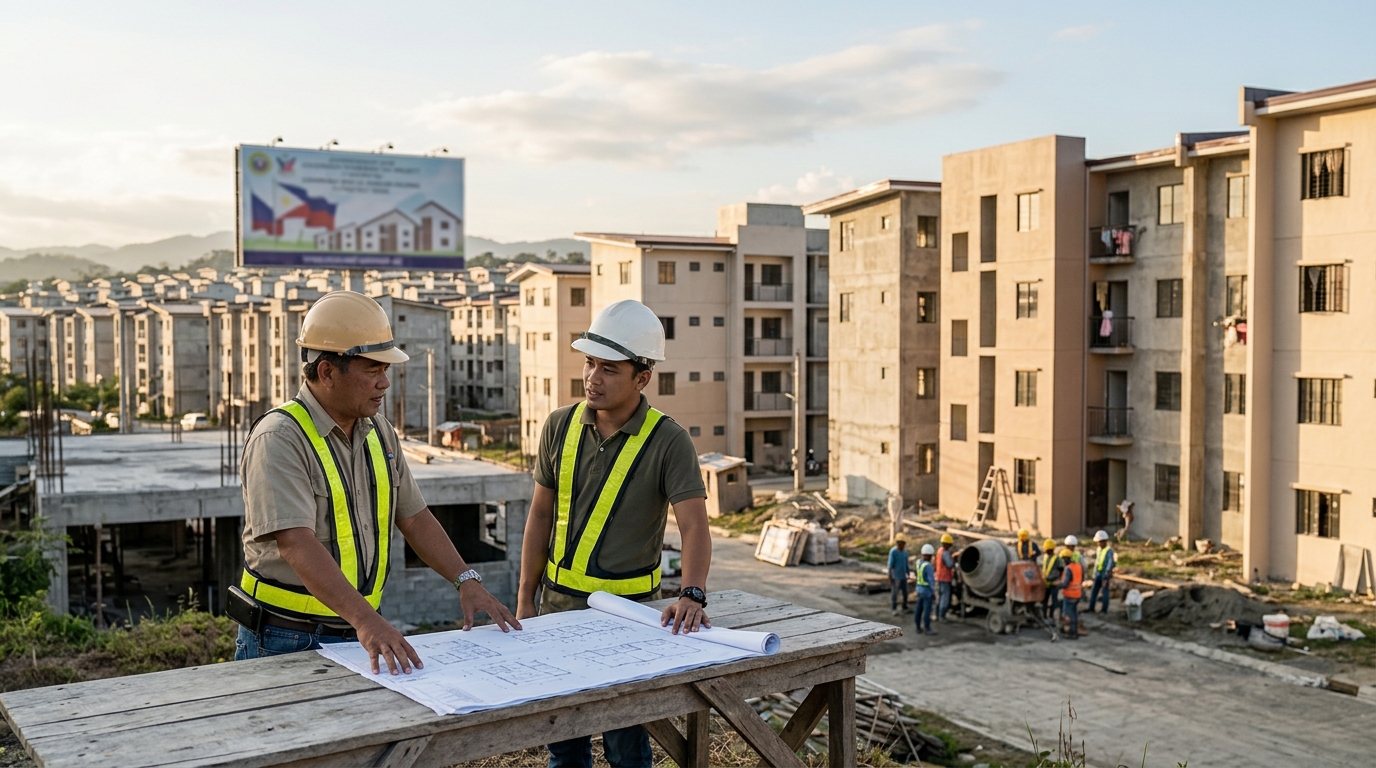
The BHDP requires developers of subdivision and condominium projects to allocate a portion of their project area or cost for affordable housing. By granting this breathing room, DHSUD aims to ensure that the pipeline of climate-resilient, low-cost units continues to expand rather than stall, ultimately benefiting Filipino families who continue to aspire to homeownership despite global turbulence. The department has emphasized that the deferment is a strategic pause, not a rollback of obligations.
Broader Housing Agenda Marches Forward
While the 36-month window eases immediate pressure on private builders, the government's broader socialized housing machinery continues to accelerate. The Expanded Pambansang Pabahay para sa Pilipino (4PH) Program delivered thousands of beneficiaries in the first quarter of 2026 alone, with over 1,000 working-class individuals receiving certificates in Bulacan, more than 1,300 moving closer to land ownership in Pampanga, and at least 271 families securing pathways to land ownership in Laguna. Rental housing projects are simultaneously being rolled out in Iloilo and Quezon City, while over 10,000 families nationwide have availed of subsidized housing loans at Pag-IBIG Fund's lowest-ever interest rate of three percent.
The 4PH program has also been expanded to prioritize OFWs, with DHSUD removing income bracket requirements for migrant workers, subsidizing two percentage points of interest for the first five years, and offering house-and-lot options alongside vertical developments. Secretary Aliling has stressed that the government will continue scaling up delivery in the coming months, ensuring that the temporary deferment for private developers does not slow the public sector's housing momentum.