
Bohol is currently reinforcing its status as a premier pillar of the Coral Triangle, recently drawing global attention following the May 2026, international dive summit in Manila. As the Philippines’ first and only UNESCO Global Geopark, the province offers a unique "marine superhighway" where deep-sea pelagics meet rare, intricate macro species. For travelers arriving in the first week of May, the waters are at their peak clarity, often exceeding 30 meters of visibility. This environment is not just a playground for adventure but a highly regulated sanctuary where sustainability is woven into the travel experience, proving that a high-density marine ecosystem can thrive alongside a world-class tourism industry.
A Sanctuary of Strict Standards
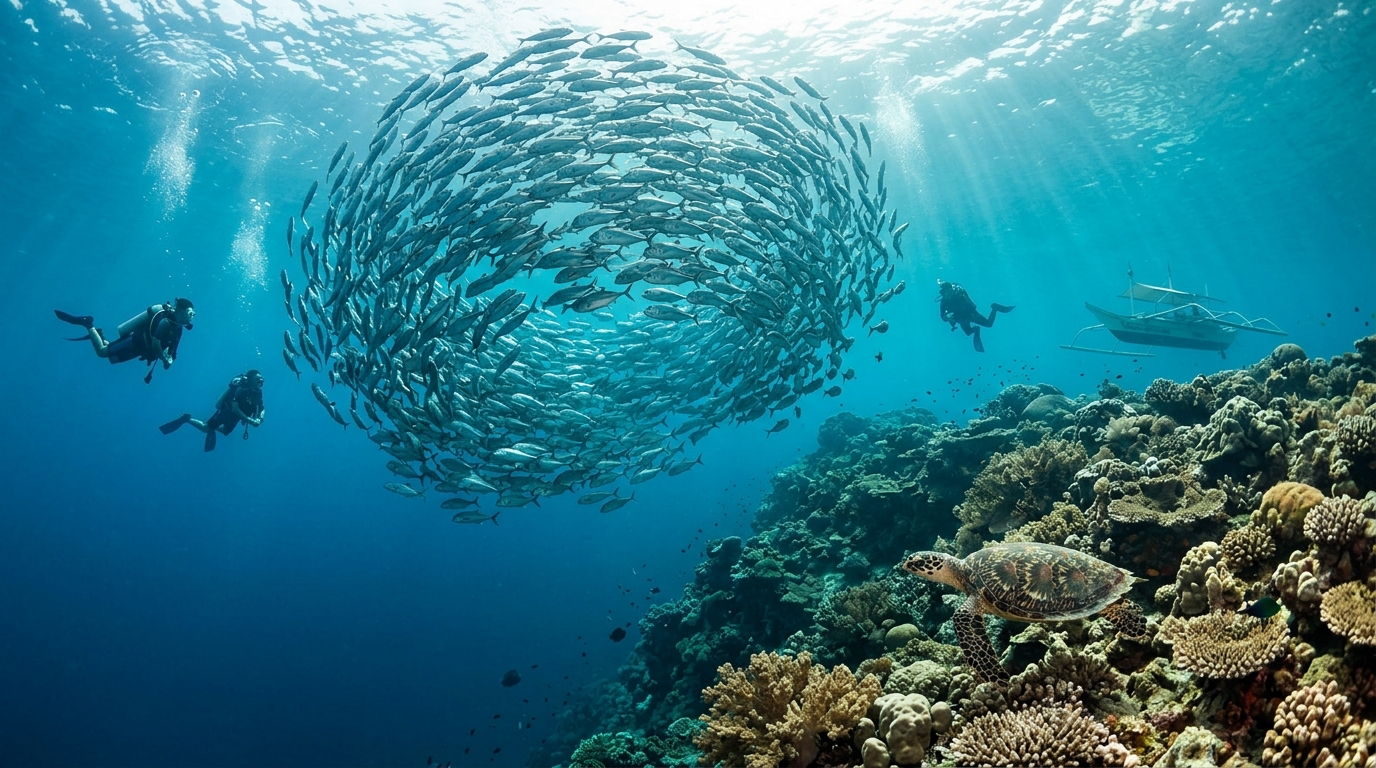
The crown jewel of Bohol’s underwater map, Balicasag Island, remains one of the most strictly managed marine protected areas in the world as of May 2026. To minimize human impact, local authorities enforce a hard cap of 150 divers per day, a regulation that has successfully preserved the island’s famous "vortices" of schooling jackfish and resident hawksbill turtles. For the 2026 season, accredited shops like Bohol Divers Club are recommending that visitors book their slots at least two to four weeks in advance to ensure entry into sites like the Black Forest. This high-barrier entry ensures that those who do dive experience a pristine, uncluttered environment where the "no-touch" rule is an absolute cultural standard.
The Urban Reef and the Remote Gem
While the Balicasag sanctuary offers vertical walls and massive schools, Panglao Island provides an "urban reef" experience with dramatic drop-offs just minutes from the shore. The Napaling Reef is currently a major draw for 2026 free-divers and photographers, thanks to a year-round sardine run that rivals the world-famous migrations in South Africa. For those seeking a quieter rhythm, the eastern coast of Anda has matured into a "hidden gem" for macro enthusiasts this May. In Anda, the focus shifts to "critter hunting," where patient divers can spot flamboyant cuttlefish and pygmy seahorses in underwater caves that remain blissfully uncrowded compared to the busier southern hubs.
Navigating the Migration Highway
The Bohol Sea is more than just a collection of reefs; it is a vital corridor for 11 species of migrating whales and dolphins, frequently spotted near Pamilacan Island during the current May window. Travelers are finding that the local "Suroy Ta" mindset extends to the water, where former whale hunters have transitioned into highly skilled spotters and guides. This transition from extraction to observation is a key reason Bohol was highlighted in the April 2026 World Travel Index as a model for community-led conservation. Whether encountering a seasonal whale shark or a rare nudibranch, the 2026 Bohol dive experience is defined by a profound respect for a marine heritage that is being protected for future generations.